

In commercial real estate, few concepts generate as much intrigue—and misunderstanding—as the “off-market deal.” To many investors, these transactions represent the holy grail: exclusive opportunities, limited competition, and superior pricing. But in practice, the reality is far more nuanced.
In markets like Halifax Regional Municipality (HRM), where relationships and local knowledge play an outsized role, off-market transactions are not only real—they are often essential. However, they are neither as common nor as straightforward as many believe.
What Is an Off-Market Deal?
An off-market deal refers to a property transaction that occurs without being publicly listed or broadly marketed. Instead, these opportunities are typically circulated through broker networks, direct owner relationships, private client mandates, and targeted outreach to select investors. In Halifax, this approach is particularly effective given the tight-knit nature of the commercial real estate community.
There is a persistent belief among investors that the most attractive deals never hit the open market. While there is some truth to this, it is often overstated. Most property owners are increasingly sophisticated and will still seek some level of exposure to create competitive tension and validate pricing. The reality is that off-market deals are relationship driven.
Halifax’s commercial real estate ecosystem is built on long-standing connections between brokers, landlords, developers, and investors. In key submarkets such as Burnside Industrial Park, Downtown Halifax, and Bayers Lake, deals often originate from conversations—not listings.
HRM Examples – Burnside Industrial Park & Downtown Halifax
In major industrial business parks across Atlantic Canada, off-market dynamics are a common feature of how transactions occur. Owner-user industrial buildings, in particular, are often pursued directly by buyers before any formal marketing takes place. Brokers frequently approach property owners on behalf of interested parties, leading to deals that happen without broad public exposure. These types of assets can also carry added value tied to expansion opportunities or future redevelopment potential.
In core downtown markets, larger transactions are often handled through controlled exposure rather than open listings. Prominent commercial assets tend to trade within institutional channels, with opportunities shared among a limited pool of qualified buyers. These transactions are typically negotiated confidentially, reflecting a broader trend where high-value properties are rarely brought fully to the open market.
Why Off-Market Activity Exists in Halifax
Several factors contribute to off-market activity in HRM. A significant portion of assets are held by private or family ownership groups who prioritize discretion. Inventory remains limited, particularly in industrial and multi-unit residential sectors, prompting buyers to act proactively. Additionally, Halifax’s stable economic growth and increasing investor interest support proactive acquisition strategies.
Off-market deals are not found, they are created. A skilled commercial broker identifies ownership patterns, understands seller motivations, initiates conversations, and aligns opportunities with qualified buyers. In Halifax, success in off-market transactions is largely driven by relationships and market insight.
Off-Market Does Not Mean Below Market
Off-market transactions do not necessarily imply discounted pricing. Sellers often expect a premium for discretion, while buyers value speed and certainty. Pricing is determined through negotiation rather than competition, particularly in high-demand asset classes such as industrial and multi-unit residential. Off-market deals are most effective when a buyer has a clear acquisition strategy, when confidentiality is required, when a property offers repositioning potential, or when a seller prefers a controlled process.
Off-market deals are not a shortcut to better pricing—they are a product of strategy, relationships, and preparation. In Halifax, they are an integral part of the commercial real estate landscape. The advantage lies not in chasing these opportunities, but in being positioned to access them when they arise.
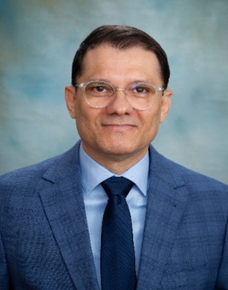
Paulo Mattos is our VP of Brokerage with over 15 years of international brokerage experience. For more information, contact Paulo at (902) 429-1811 (ext. 351), or at